If I Were to Build a CGNAT Processor Right Now
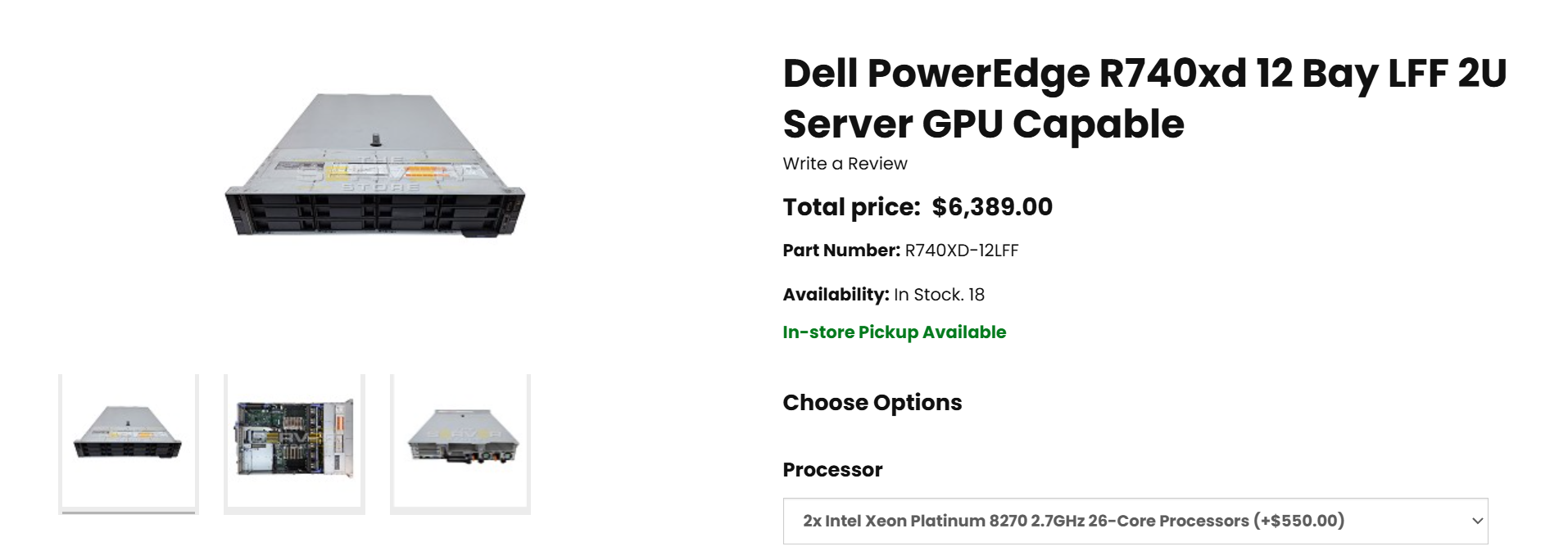
This is not a thought experiment and it is not a vendor pitch. This is a description of a single machine and the amount of leverage it puts back into the hands of the people who actually need CGNAT data.
The system looks like this:
Dell PowerEdge R740xd, 12-bay LFF
Dual Intel Xeon Platinum 8260 processors
52 physical cores total
256 GB DDR4 ECC memory
1.92 TB SATA SSD for the operating system
10 × 10 TB 7.2k 12 Gbps SAS hard drives
Bare metal, no hypervisor, no virtualization
Total cost today on the secondary market, roughly $6,400.
That is the entire bill of materials.
This is not exotic hardware. It is not new. It is not rare. It is simply the kind of enterprise system that large environments rotate out regularly, and it happens to be almost perfectly suited for CGNAT work.
What this buys you is not flash. It buys you headroom.
Fifty-two real CPU cores means you are not rationing compute when someone needs an answer. You are not waiting for a cluster to rebalance or hoping a service behaves. You decide how much power to apply to a problem and how fast you want it solved.
Two hundred and fifty-six gigabytes of ECC memory means nothing is fighting. The operating system is comfortable. The filesystem is comfortable. The processes doing the work are comfortable. There is no tuning dance just to keep things stable.
Ten large SAS drives give you simple, predictable storage. They are not fast in a benchmark sense, but they are steady, durable, and honest. For CGNAT logs, that is exactly what matters.
This machine does not need much software to be useful.
A bit of log system configuration.
Some sensible log storage tuning.
A chunk of Go code to write and process the data.
If OpenSearch is already part of your research or visualization stack, it can sit alongside this for summaries, metrics, and short-lived analysis. It does not have to carry the full weight of the data.
There are no cloud fees.
No per-gigabyte charges.
No meters quietly running in the background.
Most of the time, this system is barely doing any work at all. It writes logs, compresses them, and waits. When someone needs answers, it uses real CPU for a real task, finishes, and goes back to idle.
For the cost, that is an enormous amount of capability.
Not because it is clever, but because it is direct.
For CGNAT, sometimes that is all you need.