Is It Yours?
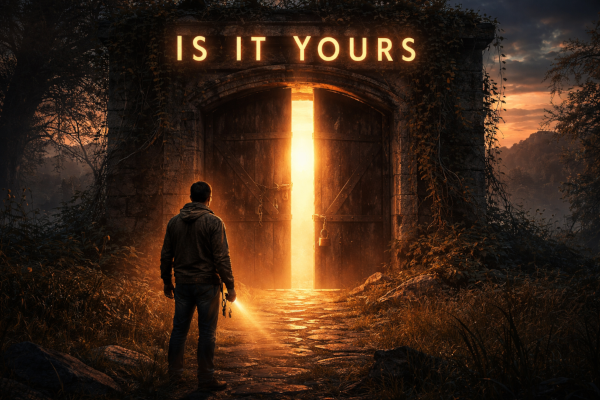
That Is The Queueston
There is a moment when convenience quietly crosses a line and becomes surrender.
It never announces itself. It arrives dressed as relief. Fewer decisions. Fewer responsibilities. Someone else will hold the keys, watch the doors, remember the rules. All you need to do is show up and ask nicely.
At first, this feels like progress.
But something changes when the thing you rely on most is no longer something you can touch, repair, or fully understand. Authority drifts outward. Control becomes conditional. Access depends on permission granted somewhere beyond your reach, by someone who does not know your terrain, your weather, or your people.
You are still present. Your name is still attached. When it fails, the consequences still land at your feet. But the power to act has thinned. You cannot fix the root. You can only report the symptoms and wait for an answer to travel back down the wire.
Over time, this reshapes the soul of the steward.
Judgment gives way to procedure. Understanding gives way to compliance. Responsibility remains, but agency fades. You are left managing expectations instead of reality, translating decisions you did not make into outcomes you must own.
The danger is not dependency alone. Humans have always relied on tools, on each other, on shared systems. The danger is forgetting where trust begins. When the foundation itself is rented, when access to your own house depends on a distant hand that may or may not answer, you no longer inhabit the place. You occupy it at someone else’s discretion.
From far enough away, this looks like order. From closer in, it is a hollowing out.
The quiet tragedy is that this trade is often made willingly, even eagerly. Control is heavy. Ownership demands attention. It requires standing watch through long nights, knowing that if it breaks, the work is yours. Many will trade that weight for ease without noticing what they have given up.
But there is an old truth that keeps resurfacing.
If you cannot enter without asking.
If you cannot repair without permission.
If you cannot stand alone when the lights go out.
Then what you have is not yours, no matter how familiar it feels.
You are not a keeper of the system.
You are a guest inside it.
And guests, no matter how long they stay, do not decide when the doors close.